
1. Everything with a beginning has a cause.
2. The universe had a beginning.
3. The universe has a cause.
Edward Hubble discovered that the universe is constantly expanding. How so?
Light shifts colors the farther it has to travel, so Hubble used this to his advantage.
By measuring light waves from "nearby" stars, he discovered that their wavelenghts were
shifting.
Specifically, they were shifting from red (high energy) to blue (lower energy) light.
This indicated that the stars were moving further away and the light was having to travel a
greater distance to the telescope than before.
The fact that things are moving away at a steady rate indicates the fact that, if we were to
turn back the clock far enough,
everything would converge at a single point that it all exploded out from. Kind of like a BIG
BANG!
One would expect something like the Big Bang to have some residual evidence, even all fo these
billions of years later, right?
Well, great news! There is! Scientists Arno Penzias and Robert Wilson found some afterglow of
cosmic microwave background radiation coming from the Big Bang.
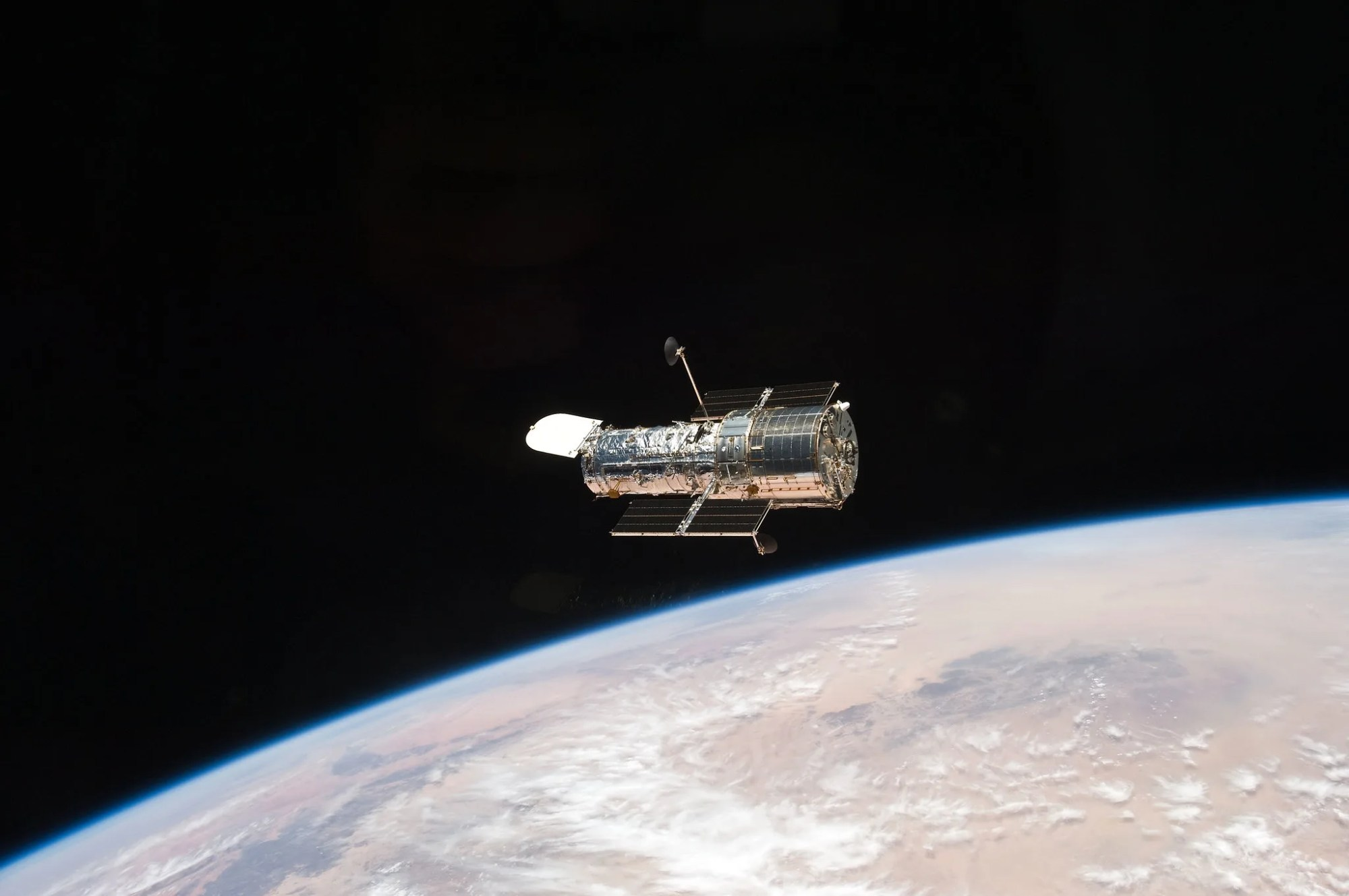
Pretty neat, right?! They did this utilizing sensors up in space!
The basic premise of entropy is that everything goes from a state of order to disorder.
What does that have to do with a universal beginning? Well, if there was no beginning, that is
due to the universe being infinite.
If the universe is infinite, there has been unlimited time for things to go from order to
disorder, as such, we would have nothing in a state of order.
However, our entire universe is in a state of order, stars, planets, asteroids, etc.
All of these things, if the universe has had an infinite past, should be nothing but dust.
In a nutshell, the theory is as follows: Time, Space, and Matter are all interdependent.
How is that relevant? Well, it means that all three had to come into existence at the same time
since they cannot exist without each other.
If space and matter have had a beginning, as we have found in the evidence for the Big Bang
then time could not be infinite as it is interlinked with space and matter, which have a
beginning.
No infinite time means that there was, indeed, a beginning.